








Featured in leading trade media

FOCUS Online Handelsblatt AssCompact DAS INVESTMENT FONDS professionell ONLINE Pfefferminzia wallstreet:online VersicherungsJournal Wirtschaftsforum FAZ Kaufkompass Westfalen-Blatt krankenkassen-direkt.de FOCUS Online Handelsblatt AssCompact DAS INVESTMENT FONDS professionell ONLINE Pfefferminzia wallstreet:online VersicherungsJournal Wirtschaftsforum FAZ Kaufkompass Westfalen-Blatt krankenkassen-direkt.de

Is private health insurance worth it for employees?

Use our Decision Check to review your income, your plans and what you expect from a plan. You get an assessment, not a plan recommendation.

We also advise against it if private health insurance does not suit your situation.

  • Family, health and career are taken into account.
  • Today’s premium is not the only thing that counts.
  • A “no” is also a serious result.

7 short sections · about 6 minutes · free and without obligation

Important tips for employees

A switch to private health insurance needs careful thought. The most important points before you decide.

01

Check the Jahresarbeitsentgeltgrenze

As an employee, you can only switch to private health insurance if your gross salary is above the Jahresarbeitsentgeltgrenze JAEG · JahresarbeitsentgeltgrenzeThe annual income threshold in Germany. Employees who earn more than this per year may leave statutory health insurance and switch to private health insurance.More about JAEG → of €77,400. If you are just below it, you should include salary components such as holiday pay or Christmas bonus in the calculation. From 2027, the JAEG is €84,150.

Requirements for employees →

02

Use the employer contribution

Your employer generally pays 50% of your actual private health insurance premium, but only up to the statutory maximum contribution. In 2026, this maximum for private health insurance is €508.59 per month. From 2027, the maximum employer contribution is expected to be €557.81.

04

Plan for Krankentagegeld

Your employer continues to pay your salary for the first six weeks. After that, you need a replacement, so you secure Krankentagegeld KrankentagegeldPrivate sick pay: a daily allowance from private insurance while you are unable to work. It replaces lost income from an agreed day of illness.More about Krankentagegeld → from the 43rd day. Employees should secure at least €170 per day.

05

Gross is not the same as net

Do not fall for advertising offers from Check24 and similar portals. Their calculators always show gross premiums and therefore gross savings. What matters for you, however, is always the net savings compared to statutory health insurance.

Costs for employees →
07

Your profession can decide whether you are accepted

Acceptance does not depend on the plan alone, but also on your professional group. The DKV has its own group contracts for several liberal professions and speaks of guaranteed acceptance despite pre-existing conditions. If you work as an employee in such a profession or plan to become self-employed, you should have this option checked before the regular application.

Your path into private health insurance as an employee

Requirements: when you are allowed to switch

Whether you can switch to private health insurance depends on your regular gross salary and on your state of health. Which salary components count, what applies after a pay rise or a new job and why the cutoff date in September matters is explained in our article on the requirements of private health insurance for employees. We explain the threshold itself and its annual adjustment under Jahresarbeitsentgeltgrenze.

Costs: what is left for you after the contribution

Never compare the gross premium. Compare your own share after the employer contribution and tax. How this own share compares to statutory health insurance, what determines the premium and why a plan with better benefits is often the better choice is shown in a concrete cost comparison under costs of private health insurance for employees.

Comparison: what matters when you choose a plan

A plan comparison by gross premium misleads employees. What matters are benefits, deductible, premium stability and premium relief in old age. In which order you should check these criteria and why online comparisons fall short here is explained in our private health insurance comparison for employees.

Best private health insurance: which plans prove themselves in practice

For employees, the best private health insurance is rarely the test winner of a comparison portal. It is the plan that convincingly combines net premium, premium relief, premium stability and benefits. Which insurers have proven themselves in our advice and how you can recognize a suitable plan is explained under best private health insurance for employees. Before you apply, it is worth looking at the health questions.

Comparison: statutory or private insurance for employees?

A neutral comparison of the two insurance systems for employees.

CriterionStatutoryPrivate
PremiumThe contribution depends only on gross income (up to the Beitragsbemessungsgrenze BBG · BeitragsbemessungsgrenzeThe contribution ceiling of statutory health and long-term care insurance. Income above this amount is not used to calculate contributions.More about BBG →).The cost is calculated from health status, entry age and the chosen scope of benefits.
FamilySpouses without income and children are insured at no extra cost (family insurance).Each person needs a separate policy and pays a separate premium.
BenefitsCare defined by law at a sufficient, appropriate and economical level.A contract you can tailor, with guaranteed and often more extensive benefits.
AccessOften longer waiting times for appointments, usually through the referral system.Faster appointments and direct access to specialists.

Real cases from our advice

Real situations that show how individual the right solution is.

Switching at 32

Employee, single, healthy: clearly better benefits at a comparable own share, thanks to the employer contribution.

Unmarried couples

Main earner in private insurance, partner and children in statutory insurance at no cost: often the most cost-efficient solution for unmarried couples.

Pre-existing condition

The right plan found through an anonymous risk enquiry, without an entry in the register.

How much does private health insurance cost for employees?

Private health insurance for employees starts at around €280. What matters: every insured person chooses the scope of benefits. Very low cover often leads to dissatisfaction, because certain costs then have to be paid out of pocket.

Plans at the level of statutory health insurance cost about €400, comfort plans start at around €600. We recommend a sensible middle ground based on your profile. On average, the cost is about €480 a month.

What monthly premiums should you expect in statutory and private health insurance?

In statutory health insurance, the maximum for 2026 is around €1,250 including the Zusatzbeitrag ZusatzbeitragThe additional contribution each statutory health insurance fund charges on top of the general rate. Its level differs from fund to fund.More about Zusatzbeitrag → and long-term care insurance. The employer pays half, so its share is about €601.60 a month. In private health insurance, the premium depends on the scope of benefits, your health and your age. Plans start at around €500 a month. Here too the employer pays half, but no more than it would pay for a member of statutory insurance. Most insured people therefore pay around €250 a month.

How do premiums develop in the long run?

Even if premiums sometimes fall, you should expect them to rise in the long run. For context: from 2006 to 2026, premiums in private health insurance rose by an average of 3.4% a year according to the association of private health insurers, and contributions in statutory health insurance by 3.9%. Beyond the general figures, the choice of plan is decisive. We therefore look closely at plans with high premium stability.

How do costs stay manageable in old age?

In private health insurance, your premium is calculated independently of your income. Over the years, many privately insured people save noticeably compared with statutory insurance. It is important to set aside part of these savings for higher costs in old age. In addition, ageing reserves cushion the premiums, the statutory 10% surcharge ends at age 60, and the Krankentagegeld  ends when you retire. A premium relief plan lets you lower your premium in old age in a targeted way.

How can I reduce my premiums?

First, look at the benefits: do you still need all of them, and does a deductible make sense? A plan change with your insurer under § 204 VVG often saves money without switching insurers and without losing your ageing reserves. In some cases, switching insurers can also be an option.

Example calculationEmployee · 32 years · income above €78,000
ItemCurrent (statutory)Target (private)Difference
Monthly premium€1,017.19€625.50− €391.69
Employer contribution€508.59€312.75− €195.84
Own share, gross€508.59€312.75− €195.84
Total annual cost (own share)€6,103.08€3,753.00− €2,350.08

Example calculation based on average plans. Individual factors such as health status and choice of plan affect the result. For this profile, the own share shows an annual saving potential of more than €2,300 with a higher level of benefits at the same time.

The best plans for employees

Strong comprehensive plans for employees above the Versicherungspflichtgrenze , rated on five key figures.

Open the plan calculator

Our rating for each plan on a scale from 1 to 10. We deliberately show no monthly premiums, because the premium depends on age, health and scope of benefits.

Which benefits matter for employees?

Popular benefit modules you can choose in your private health insurance.

Dental treatment and dentures

Private health insurance should cover at least 80% of high costs for dental treatment, crowns, implants and other dentures.

Chief physician treatment and single room

Often a cost driver: how important are these benefits to you? This is a personal decision.

Preventive checkups

Private health insurance should reimburse the important preventive checkups without restrictions.

Therapies

Physiotherapy, speech therapy and occupational therapy should be reimbursed without tight benefit limits. This helps especially people who sit in an office all day.

Reimbursement above standard maximum rates

Good plans reimburse doctors' fees even above the standard maximum rates of the official fee schedule. Otherwise, you are left with remaining costs.

Medical aids

Private health insurance should pay for medically necessary aids such as hearing aids, bandages or orthopedic insoles.

Accommodation and optional services

Single or two-bed room and optional medical services, depending on the comfort you want in hospital.

Save up to 25% on your private health insurance

We compare the entire market and find the plan with the best balance of benefits and stable premiums.

Calculate your savings →

The essentials of private health insurance in 10 minutes

We show you what you should know before switching to private health insurance.

  • Explained step by step
  • Each lesson links to the full guide
  • Short and to the point
1 / 8
Swipe, drag or use the arrows

Frequently asked questions

From what salary can employees get private health insurance?

Your gross income must be above the Jahresarbeitsentgeltgrenze , which is adjusted every year. In 2026, this is €77,400 per year. If you earn more, you can take out private health insurance. From 2027, the Jahresarbeitsentgeltgrenze is €84,150.

Does my employer pay part of it?

Yes. Your employer pays half of your premium, up to a maximum contribution of €508.59 per month, just as in statutory health insurance. From 2027, your employer is expected to contribute €557.81 per month to your private health insurance premium.

How stable will my premium stay in old age?

What matters is a solid plan calculation with ageing reserves. We choose plans with a focus on long-term premium stability.

Contact our experts

Get all your questions answered, free of charge and without obligation.

Talk to an expert

Personal advice from our specialists. Response time: under 24 hours.

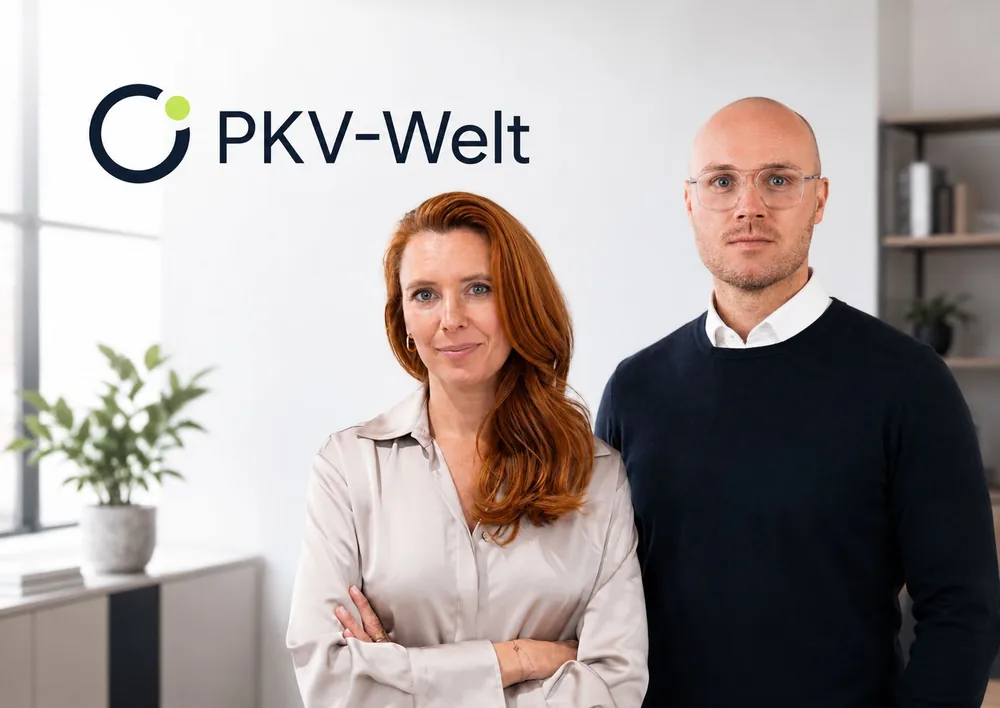
The PKV-Welt team: Tim and Sandra Bökemeier
Direct contact

Please answer three short questions about the person who is to be insured.

Currently insured
Occupation

Switching to private health insurance is probably not advisable for you.

From the age of 55, admission to private health insurance is often possible only with restrictions. A late switch can also mean higher premiums.

It matters to us that a switch pays off for you in the long run. That is why we do not recommend a consultation when your answers already show that the conditions are rather unfavorable.

Not sure, or want to correct your answers? Feel free to contact us. We will help you assess your situation.


Please choose a day

Loading free appointments

How would you like to talk?

Required field

Free of charge and without obligation. You receive a confirmation by email right away and can cancel the appointment at any time. The consultation is in English.

Your appointment is booked

The confirmation is on its way to your inbox.